Military/Defense: When Yesterday's Hardware Has to Meet Tomorrow's Technology
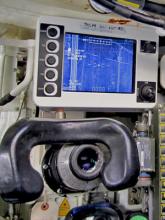
This is Part 3 of our ongoing series, How 3D Scanning and Reverse Engineering Address Emerging Challenges in Industry and Technology.
Military equipment is built to withstand demanding conditions and, in many cases, to remain in service for decades. But while aircraft, ground vehicles, naval vessels, missiles, and other defense systems may have long operational lives, the technologies they use and the industrial supply chains that support them continue to evolve.
3D Scanning in Electronics: When Technological Progress Creates New Engineering Challenges
Learn How 3D Scanning Addresses Emerging Challenges in Industry and Technology
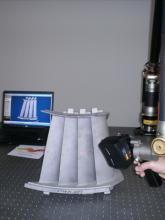
How 3D Scanning Saves Time Across Engineering, Manufacturing, and Product Development

Few statements have been as enduring as the aphorism "Time is Money." It rings as true in 2026 as when it first appeared in print in 1719. (Ben Franklin later re-articulated it in a 1748 essay.) Yet, while companies understandably continue to turn to 3D scanning to improve measurement accuracy, reverse engineer legacy components, and support quality control operations, one of the technology's most significant benefits has received less attention: time savings.
How 3D Scanning Preserves Museum Collections and Makes Restorations Possible

From “Shark Tank” to Scalable Design Innovation: How NVision Helped ReadeREST Expand Faster

NVision Helps Orthodontic Supplier Recalibrate Cone-Beam CT Scanner
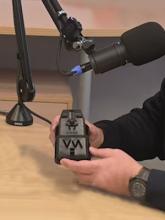
Driven to Innovate - The Lonely Pursuit of Innovation - Podcast with Steven Kersen and Ethan Vickery
Aiming for Excellence: How NVision’s 3D Laser Scanning Helped Soft Air USA® Cut Three Months from Replica Development

Bringing a highly accurate Airsoft replica to market often involves long development cycles and complex tooling workflows. For Soft Air USA®, traditional mold-based methods were stretching timelines and adding unnecessary cost and risk. Turning to NVision’s engineering-grade 3D laser scanning and CAD modeling services, the company compressed development time by months while also improving accuracy.
Introduction
NVision's 3D Scanning Expertise Accelerates Breast Implant and ENT Device Design