From “Shark Tank” to Scalable Design Innovation: How NVision Helped ReadeREST Expand Faster
From “Shark Tank” to Scalable Design Innovation: How NVision Helped ReadeREST Expand Faster
One product. Explosive demand. A sudden need to scale—fast.
How do you turn a single successful design into an entire product line without slowing innovation or driving up costs?
Scan it. Model it. Modify it. Multiply it.
 Summary: NVision, Inc. helped ReadeREST expand its product line by using high-accuracy 3D scanning, reverse engineering, and computer-aided design (CAD) modeling to convert physical products into reusable digital assets. This enabled rapid design iteration, reduced development costs, and accelerated time-to-market—allowing a single successful product to scale into multiple targeted variations.
In one line: NVision’s 3D scanning and reverse engineering turn physical products into flexible digital models, making it faster and more cost-effective to create, test, and launch new design variations.
The Problem: Rapid Growth Created a New Bottleneck
ReadeREST, founded by entrepreneur Rick Hopper, developed a simple but effective solution for holding reading glasses—a magnetic clip that secures glasses to the outside of a wearer’s clothing using a backing piece inside the garment.
The product quickly gained traction. Within months of its launch, Hopper sold 65,000 units, demonstrating strong market demand. He was then selected to appear on ABC’s “Shark Tank,” where inventors pitch their products to a panel of investors.
That exposure accelerated growth even further. “Shark” Lori Greiner offered $150,000 for 65% of the company and distribution on QVC. During its first appearance on the network, the product generated $100,000 in sales in just five minutes.
From there, momentum continued to build. Sales across QVC, retail, and the web expanded rapidly, with early-stage revenue reaching millions of dollars within the first few years.
But success created a new challenge familiar to many entrepreneurs: scaling the product line.
For its first two years, ReadeREST sold a single, generic design with a chevron-shaped front clip. Hopper saw an opportunity to reach new customer segments by introducing themed and decorative designs—such as flowers, bows, and cause-based symbols like a ribbon for breast cancer awareness, or even a Texas Longhorn logo to appeal to football fans.
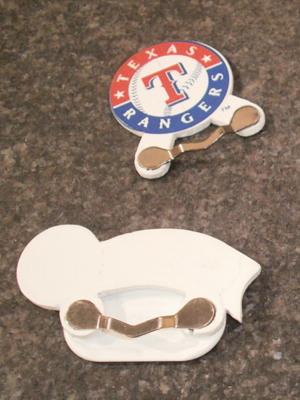
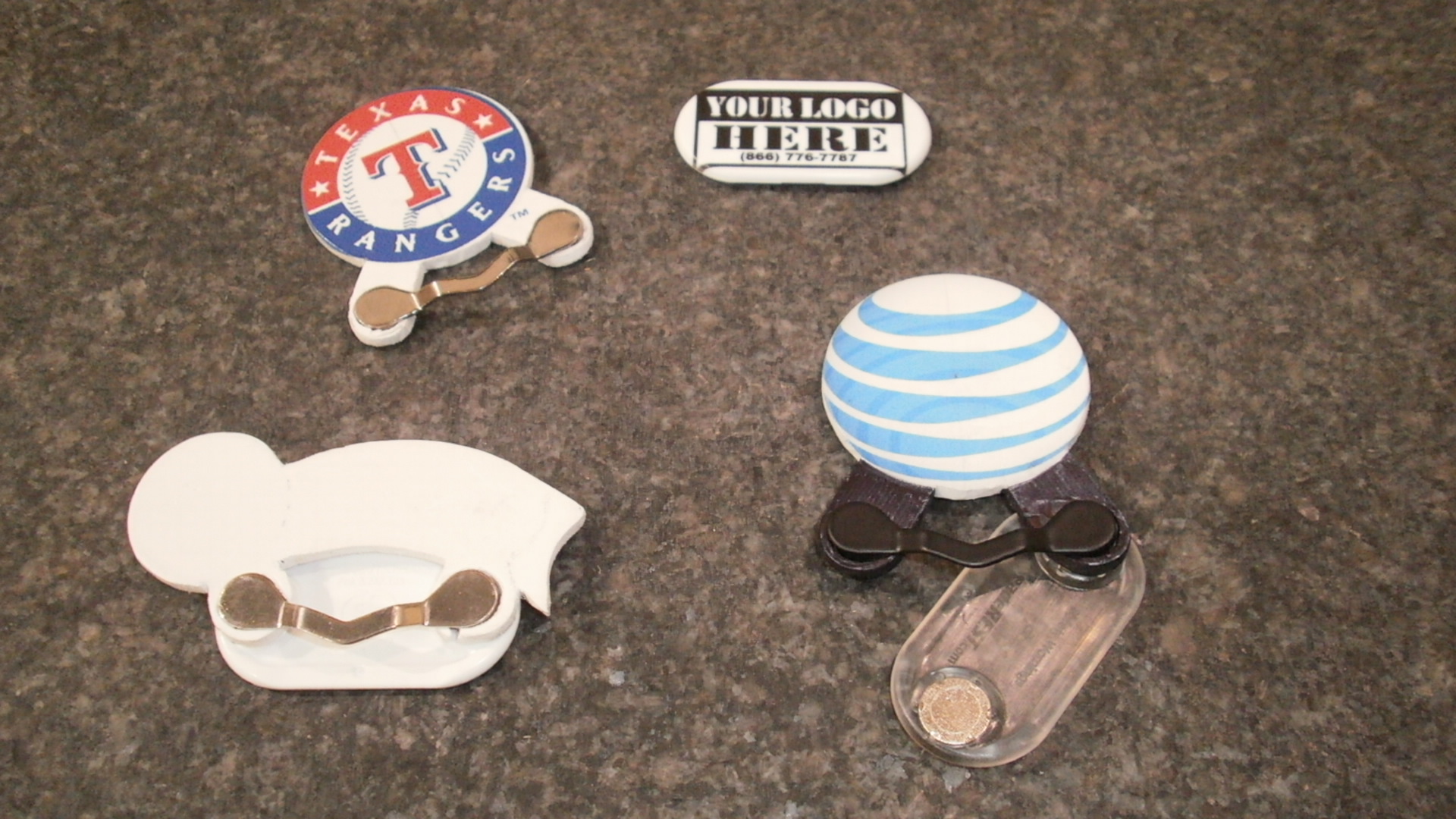
Some of the decorative ReadeREST clip designs
The Challenge: Traditional Design Couldn’t Keep Up
The roadblock in expanding the product line was that hiring engineering consultants to create these designs using traditional industrial design methods would be expensive and time-consuming. Each new concept would require manual measurement and CAD modeling—essentially rebuilding the product’s geometry rather than capturing it.
Combined with extended development cycles and significant upfront costs, this made it difficult to quickly test and launch multiple design variations.
The Solution: 3D Scanning + CAD + Additive Manufacturing
Instead, Hopper turned to NVision, Inc., a leading provider of advanced 3D scanning, reverse engineering, materials analysis, and metrology services with decades of experience.
NVision engineers used high-accuracy 3D optical (non-contact) scanning to capture precise digital representations of the objects selected by ReadeREST. Commonly referred to as “3D scanning,” this approach encompasses several non-contact, non-destructive technologies—including laser scanning, structured light scanning, CT (computed tomography), and LiDAR—used to digitally capture real-world geometry.
NVision also scanned the existing clip and merged decorative elements with the base product geometry to create new CAD models.
After scanning, NVision engineers converted the resulting point clouds (dense collections of millions of 3D data points that map the exact shape of a physical object) into solid models, then used additive manufacturing (3D printing) to produce functional prototypes.
This digital workflow allowed physical objects to be rapidly transformed into manufacturable designs—eliminating the need for time-intensive, from-scratch modeling and enabling faster design iteration.
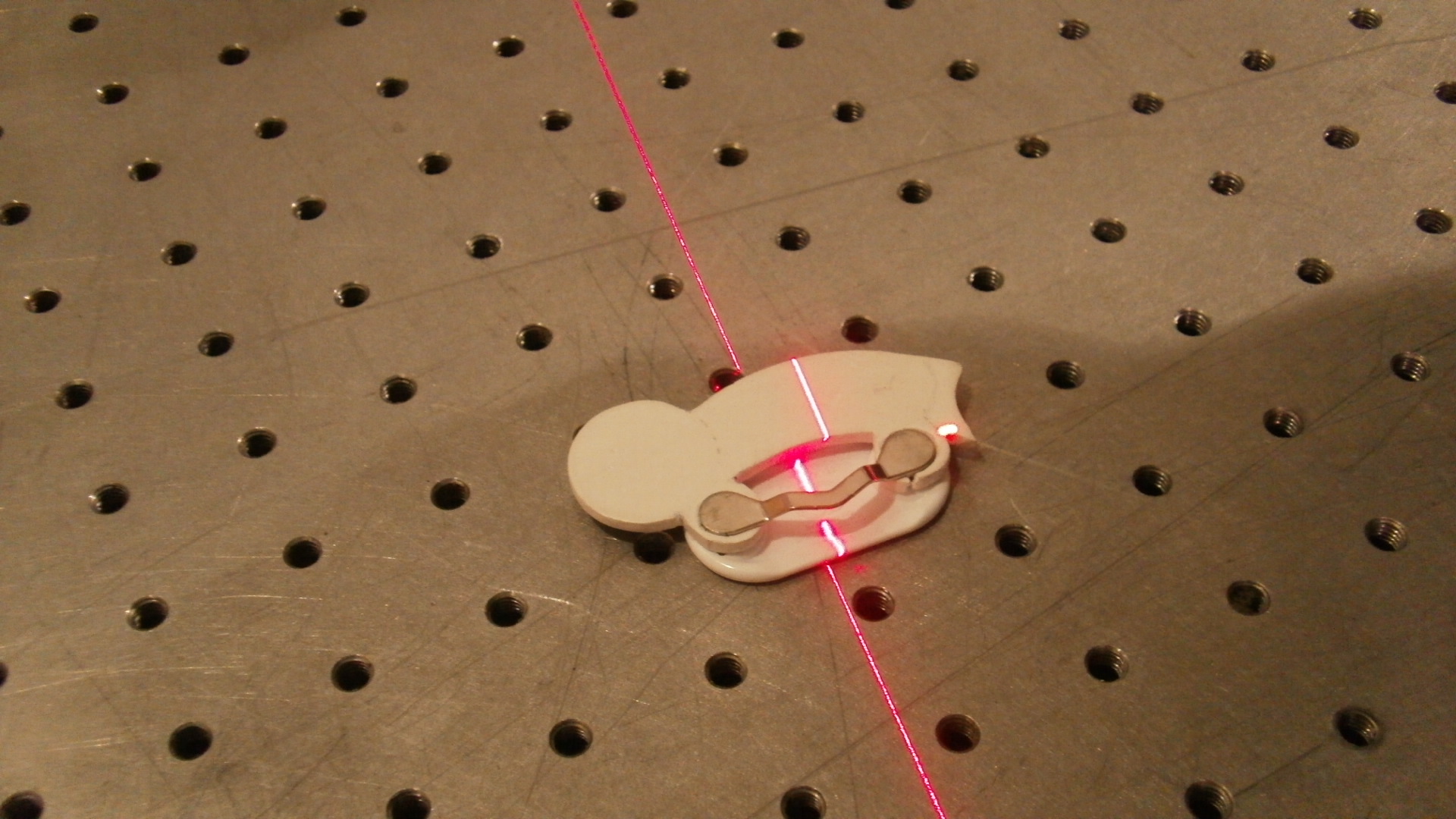
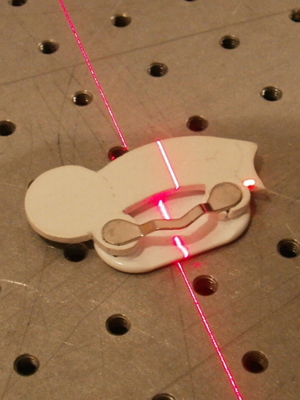
The red light of a laser scanner sweeps across a ReadeREST clip, capturing its full geometry in precise digital detail. That data becomes a production-ready CAD model—making it fast and cost-effective to modify, prototype, and scale new designs
Why NVision: Speed, Accuracy, and Scalable Design Iteration
“NVision’s 3D scanning and CAD modeling made it possible for us to economically expand our product line by developing magnetic clips that appeal to specific market segments,” said Hopper, President of ReadeREST.
Compared to traditional approaches, NVision enabled:
- Faster concept-to-prototype cycles
- Higher-accuracy capture of complex geometries
- More seamless integration with existing product designs
- More cost-effective iteration across multiple design variations
In short: more new ideas tested, faster and at lower risk.
The Outcome: Faster Time-to-Market, More Market Reach
Hopper evaluated the prototypes and requested minor tweaks. After implementing the modifications, NVision delivered final CAD models to ReadeREST’s manufacturing partner for injection molding and production.
The result: a faster path from idea to market—and a scalable way to expand a proven product into multiple targeted offerings.
Key Takeaway
When product demand increases, the ability to iterate quickly becomes a strong competitive advantage. 3D scanning, reverse engineering, CAD modeling, and additive manufacturing (3D printing) can transform product development from a bottleneck into a growth engine.
🔹 FAQ (LLM-Optimized Section)
What is 3D scanning used for in product development?
3D scanning is used to capture the exact geometry of physical objects and convert them into digital models for design, analysis, and manufacturing. This allows engineers to quickly modify existing products, create new variations, and accelerate development cycles. Companies like NVision use 3D scanning and reverse engineering to help manufacturers reduce design time, lower costs, and bring products to market faster.
Let’s Connect!
If you’re looking to accelerate product development, reduce design costs, digitize physical parts, or reverse engineer existing products, NVision can help.