
Military/Defense: When Yesterday's Hardware Has to Meet Tomorrow's Technology
This is Part 3 of our ongoing series, How 3D Scanning and Reverse Engineering Address Emerging Challenges in Industry and Technology.
Military equipment is built to withstand demanding conditions and, in many cases, to remain in service for decades. But while aircraft, ground vehicles, naval vessels, missiles, and other defense systems may have long operational lives, the technologies they use and the industrial supply chains that support them continue to evolve.
This often means that components become obsolete, original manufacturers disappear, and engineering drawings are lost or incomplete. Meanwhile, advances in electronics, sensors, communications equipment, and other technologies can create requirements that older platforms may not have been designed to accommodate. If your kitchen appliances lack the latest bells and whistles, it may be an inconvenience; for the military, outdated capabilities can erode operational effectiveness, compromise national security, and put lives at risk.
Consequently, the military faces several sustainment and modernization challenges: (1) keeping legacy equipment operational while integrating new capabilities, (2) fitting new technology into the space available within existing platforms, and (3) building a more resilient supply chain to support long-lived legacy systems.
3D scanning and reverse engineering can help address these challenges by capturing the physical geometry of existing components and equipment, turning that information into usable digital engineering data, and providing a foundation for repair, replacement, inspection, and redesign.
Challenge 1: Keeping Legacy Systems Operational
Why It's Emerging
Military systems can remain in service long after the components they depend on have disappeared from commercial production. This can be problematic. Over time, a supplier may have discontinued a part, gone out of business, or lost access to the tooling and manufacturing processes originally used to produce it.
The problem can be compounded when original computer-aided design (CAD) models and engineering drawings are missing or incomplete. Even if the original design documentation survives, it may not reflect modifications made over years of service, leaving engineers without an accurate representation of the components they need to repair or replace.
Even when a replacement is available, long lead times, limited quantities, or supply-chain disruptions can further complicate maintenance and repair, potentially causing critical delays.
The Solution: Digitally Recreate the Original Design
3D scanning provides a way to recover critical dimensional information directly from a physical part. By capturing a part’s geometry, scanning creates a foundation for reverse engineering and developing a CAD model for further engineering work.
The resulting model can help engineers design a replacement component or prepare manufacturing documentation, potentially reducing dependence on original design files and discontinued production resources.
Scan data can also support dimensional inspection by allowing engineers to compare a physical component with its CAD model or other defined reference data. If material composition or metallurgical properties need to be established, materials analysis and other appropriate testing can supplement the dimensional information.
Although scanning cannot, by itself, establish every requirement for a replacement part, it can provide an important first step toward recovering the engineering information needed to maintain aging equipment.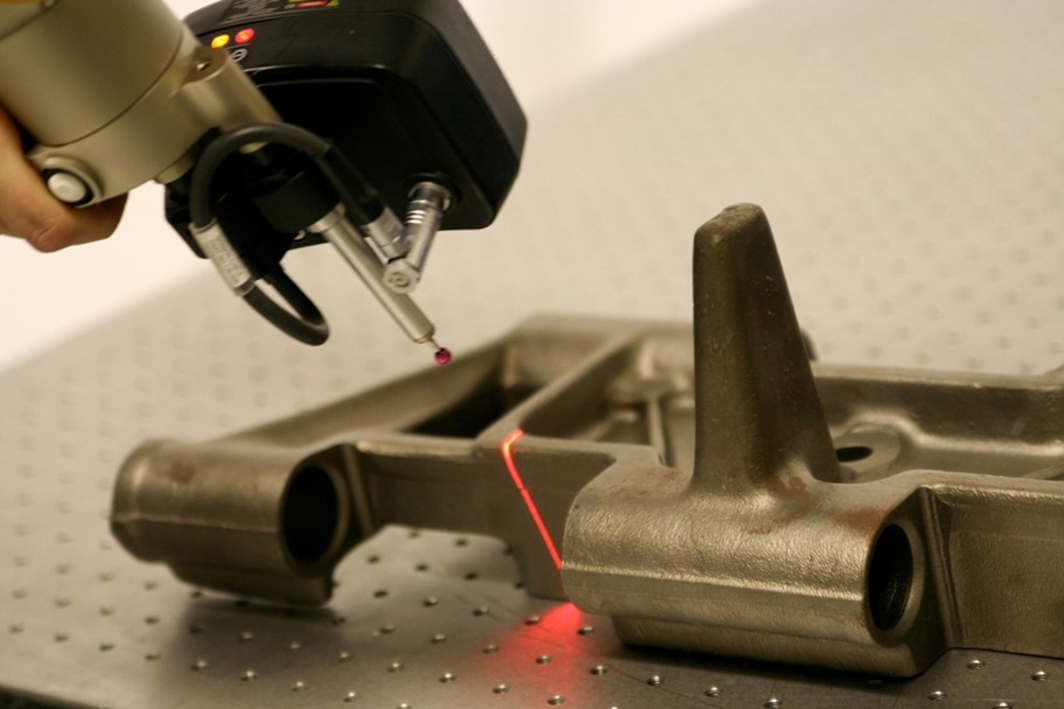
Figure 1: A tank component being laser-scanned. 3D scanning captures a physical part's geometry, providing a foundation for reverse engineering and developing a CAD model for further engineering work.
Challenge 2: Fitting New Technology into Existing Equipment
Why It's Emerging
Military organizations must continually adapt to changing operational requirements and technological advances. Legacy vehicles, aircraft, and naval platforms may need updated electronics, sensors, communications systems, cooling equipment, or other components to provide new capabilities.
The primary hurdle is integrating this advanced technology within the fixed physical limits of existing platforms. Engineers must account for size, weight, power, and cooling (often abbreviated as SWaP-C), as well as the space and infrastructure available for new equipment.
Consider the M1 Abrams tank. Its basic physical envelope imposes constraints on modernization: engineers cannot simply assume that more space can be made available for additional equipment. Upgrades must account for the vehicle's armor and structure, weight distribution, mobility, and transport requirements. Furthermore, adding more powerful computing or electronic systems can introduce additional power and cooling demands that must be evaluated.
Similar constraints exist inside aircraft, naval vessels, and other military platforms. Cockpits, equipment bays, mounting points, and surrounding structures may have been designed around an earlier generation of technology, leaving limited room for modern digital systems and their supporting equipment.
The challenge is to accommodate more capable technology within physical and infrastructure limits that may be difficult or impractical to change. How do military engineers fit tomorrow's technology into yesterday's hardware?
The Solution: Using Digital Models to Make Room for New Technology
3D scanning can capture the shape and dimensions of an existing installation environment, providing a detailed digital representation of the space available for new equipment. Engineers can use this information to design mounting brackets, enclosures, adapters, and other interfaces that integrate new components with existing structures.
Digital models can help engineers identify potential interferences and fit problems during equipment-layout planning, before new parts are manufactured or installed. Separate engineering analyses are still needed to assess electrical power requirements, heat dissipation, structural effects, and overall system performance.
Scan data can help engineers identify where targeted modifications may accommodate new technology while preserving as much legacy hardware as practical.
In this way, 3D scanning and reverse engineering can help bridge the gap between legacy hardware and modern capabilities.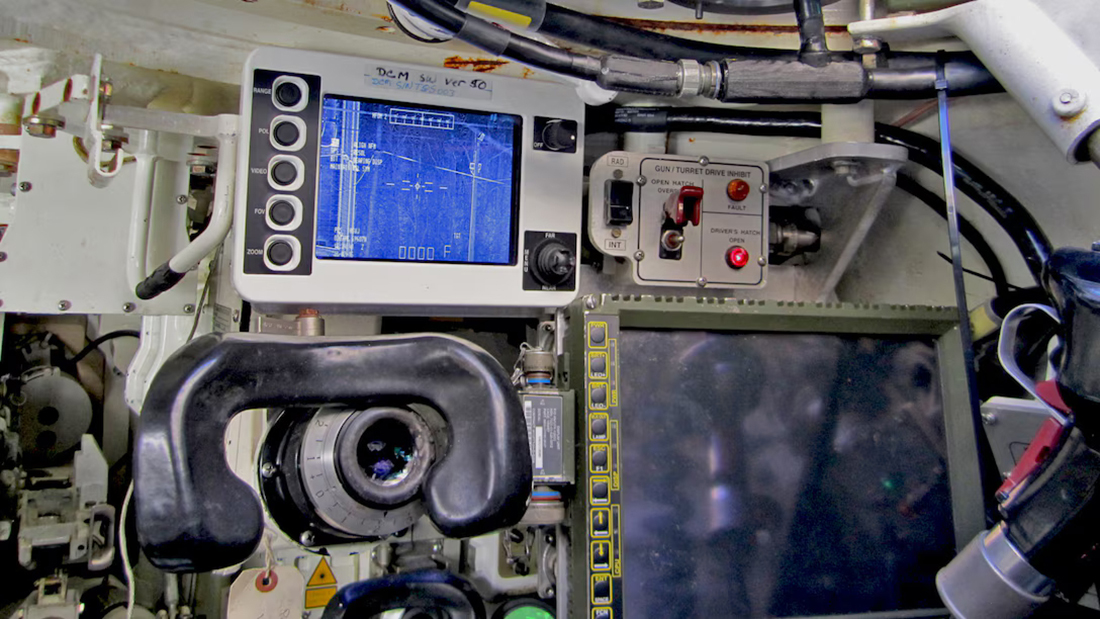
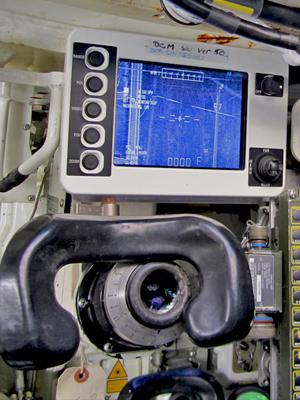
Inside a Modernized Abrams Tank Commander's Station. This photo of an M1A1 Abrams AIDATS Control Panel illustrates the immense challenge of installing modernized systems in legacy platforms. The tank’s upgraded digital thermal and day sight system must be integrated directly alongside dense, pre-existing legacy wiring, structural bars, and analog components—tightly packing new architecture inside the vehicle's fixed, rigid frame. (Photo: U.S. Military / Public Domain)
Challenge 3: Building a More Resilient Supply Chain
Why It's Emerging
Defense organizations can become vulnerable when they depend on a single supplier for components used in aging equipment. If that supplier disappears, discontinues production, or can no longer provide parts, finding an alternative source may be difficult.
The challenge can be especially acute when original manufacturing tooling has been retired, specialized production processes are no longer available, or the quantities needed are too small to attract a new supplier.
The potential for supply-chain disruptions makes it important to identify alternative manufacturing sources before a shortage becomes an urgent maintenance problem.
The Solution: Creating New Options for Manufacturing
Reverse engineering can help organizations recover the dimensional information needed to evaluate alternative sources of supply.
A 3D scan can capture a component's geometry, and the resulting data can be used to develop a CAD model that serves as a starting point for producing the part through another qualified manufacturer or an updated manufacturing process.
This approach may help reduce dependence on a single supplier and provide greater flexibility when original production resources are no longer available.
Reproducing a component, however, involves more than matching its external shape. Material properties, internal features, surface finish, tolerances, and performance requirements may all affect its suitability. Those factors must be evaluated as part of the engineering and qualification process.
Nevertheless, recovering missing design information can give engineers more options for addressing obsolescence and strengthening the supply chain that supports long-lived military systems.
From Physical Hardware to Digital Engineering Data
The underlying issue is similar across all three challenges: engineers must make informed decisions about physical equipment, but the digital information needed to support those decisions may be missing, outdated, or incomplete.
3D scanning helps bridge that gap by capturing detailed dimensional information from existing components and structures. Reverse engineering uses that information, together with engineering judgment and any available documentation, to reconstruct CAD geometry and develop the models and drawings needed for downstream activities such as manufacturing, installation, and inspection.
Depending on project requirements, a comprehensive workflow may also include 2D engineering drawings, dimensional inspection, and materials analysis.
The precise scope matters. Scanning establishes geometry; it does not, by itself, establish a component's material properties, certify its performance, or authorize its return to service. Those determinations require appropriate engineering evaluations, testing, and approvals. What scanning can do is provide the dimensional data that supports those evaluations and helps engineers make informed decisions.
Keeping Legacy Systems Ready for the Future
Military equipment must meet today's operational requirements, even when its original design, components, and supporting documentation date back decades. At the same time, emerging technologies continue to create new demands for systems that may have been designed for a very different era.
3D scanning and reverse engineering offer practical tools for addressing this disconnect. By capturing existing geometry and helping turn physical components into usable digital engineering data, they can support replacement-part development, equipment modernization, dimensional inspection, and long-term sustainment.
For organizations responsible for keeping legacy systems operational, the goal is not necessarily to replace yesterday's technology. It is to find effective ways to maintain it, improve it, and integrate new capabilities where needed.
As military systems continue to evolve, the ability to connect physical hardware with accurate digital engineering data can help keep proven platforms useful in a changing technological landscape.
About NVision
NVision's 3D scanning and reverse engineering services can help provide the dimensional data and digital models engineers need to tackle these challenges—from documenting existing components to developing CAD models and supporting the design of replacement parts.
Have an emerging military equipment challenge that could benefit from 3D scanning? NVision can help explore the possibilities. Contact us to learn more.
NVision, Inc.
577 Commerce Street, Suite 100
Southlake, TX 76092
Tel: (817) 416-8006
Email: sales@nvision3d.com
Website: https://www.nvision3d.com/