How 3D Scanning Preserves Museum Collections and Makes Restorations Possible
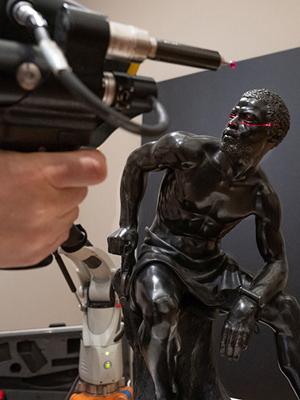
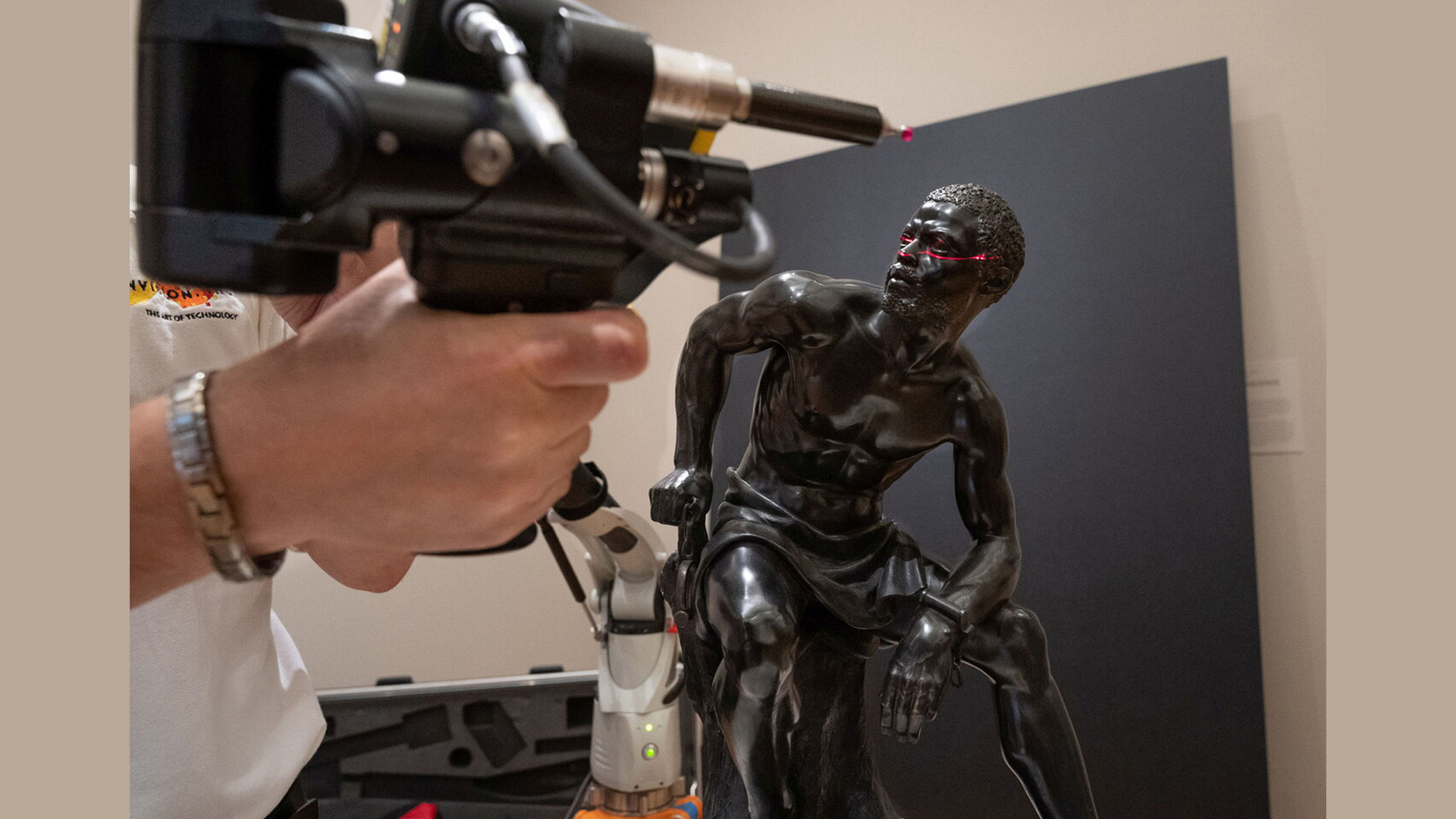
NVision technicians laser scan John Quincy Adams Ward's The Freedman, creating a highly accurate digital model that can support preservation, research, restoration, public engagement, and even the creation of new cultural value.
Seeing the Light: How Museums Can Use 3D Scanning to Preserve Collections, and Enhance Study, Display, and Public Engagement
Problem: Our Priceless Cultural Heritage Can Be Lost, Quickly and Forever
If you saw, in person, the original Greco-Roman sculptures and busts formerly housed in the National Museum of Brazil in Rio de Janeiro, consider yourself fortunate. Most of the marble and bronze pieces were destroyed without any replicas having been made when a fire mercilessly swept through the museum in September 2018. They were among the more than 18 million exhibits destroyed in the catastrophe.
The loss of these unique works, along with others lost to natural disasters, war, vandalism, and negligence, underscores the critical need for art museums and other cultural heritage institutions to take proactive measures to ensure the preservation of their collections.
The danger is real, not hypothetical. A 2023 peer-reviewed study documented significant collection losses or damage at 57 museums across 30 countries due to fires, floods, earthquakes, wars, and civil unrest, noting that such events have occurred with "alarming frequency" over the past two centuries. UNESCO likewise warns that museums and collections face heightened risks of damage, theft, and misappropriation during emergencies, particularly during armed conflicts and occupations.
But efforts to protect and preserve irreplaceable artifacts and works of art run into a difficult reality: How do you keep collections accessible for public engagement and study today while preserving them for the art lovers, historians, and researchers of tomorrow?
This is where digital preservation techniques, particularly 3D scanning, come into play.
In the decades since its origins in the 1960s, 3D scanning’s speed and accuracy have progressed to levels inconceivable to its original developers. While the technology has become indispensable in manufacturing, energy, defense, and other technical fields, its applications in museums are equally transformative.
Challenge: Protecting Fragile Objects While Expanding Public Access
3D scanning is now one of the key solutions used by museums to safeguard the integrity of their collections and excel in their other core missions of education, research, and exhibition. Art museums in particular face the formidable challenge of maintaining extremely fragile and irreplaceable objects while also ensuring public accessibility.
If you’re not familiar with 3D scanning, just imagine if you could obtain the information needed to duplicate an object by simply shining a flashlight over its surface. That idea once sounded fantastical, but that's essentially what 3D scanning does, with the flashlight's beam replaced with a beam of electromagnetic radiation, such as laser light or X-rays. It's a non-contact, non-destructive method of digitally acquiring precise data on the shape, dimensions, and surface attributes of a real-world object or environment.
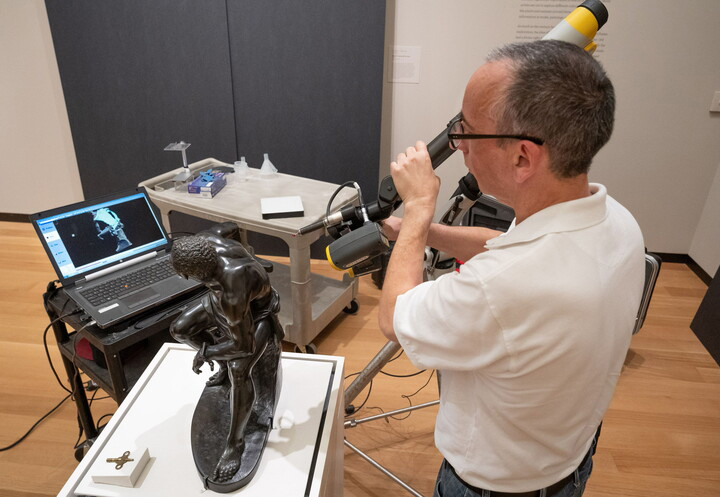
A handheld scanner can capture the 3D geometry of objects across a broad range of complex sizes and shapes.
This data generates a computer-aided design (CAD) duplicate of the scanned object (or environment), which can be used for measurement and inspection, comprehensive examination and analysis, replication, and more.
3D scanning is highly accurate and ideal for situations that require greater precision and accessibility than conventional tools can provide, such as intricate sculpture geometries and internal structures such as internal chambers, frameworks, and other elements supporting outer material. Objects characterized by intricate shapes such as curves, indentations, protrusions, and other irregular surface features are good candidates for 3D scanning.
However, not all scanning technologies are the same, and selecting the appropriate scanner depends on the object, the project requirements, and the desired data output.
Depending on the object and the scanning goals, different technologies offer distinct advantages. Time-of-flight (TOF) scanners are particularly effective for large objects and environments, CT scanners can reveal internal features, CMMs provide exceptional precision, and handheld laser scanners offer versatility and portability. Selecting the right technology depends on the object's size, complexity, accessibility, and the intended use of the resulting data.
The challenge for museums is not simply capturing data; it is determining how to leverage that data to best support preservation, education, accessibility, restoration, and research goals.
Solution: Using 3D Scanning to Preserve, Study, Restore, and Share Collections
3D scanning can enhance museum operations in multiple ways, including:
- Documentation and Preservation
3D scanning lets museums save comprehensive records of rare objects with remarkable detail, including precise dimensional measurements, complicated surface geometries, intricate textures, and other fine details unobtainable through traditional inspection techniques.
By creating highly accurate digital copies of their collections, museums safeguard themselves from future loss caused by disasters, deterioration, or accidental damage.
- Special Exhibitions and Public Engagement
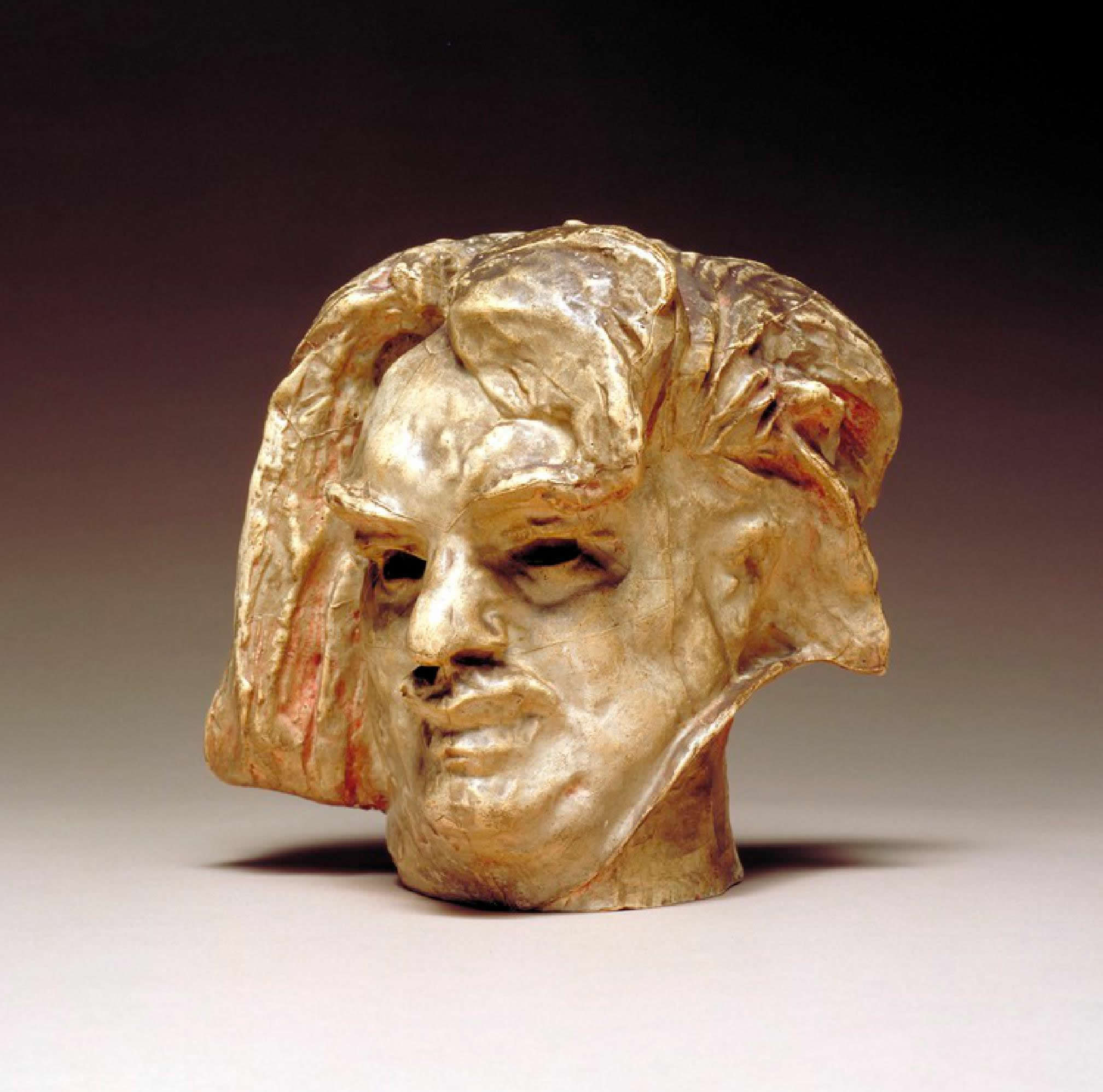
Replica of Auguste Rodin's sculpture, Head of Balzac. The original sculpture was 3D-scanned and reproduced for the Nasher Sculpture Center in Dallas as part of a special exhibit that created a tactile educational experience for visitors with visual impairments.
Beyond simply preserving objects, 3D scanning opens new possibilities for accessibility and audience engagement.
Scanned models can be used to create immersive virtual exhibitions that reach broader audiences, enhancing museum accessibility and engagement. Additionally, replicas created from scanning data provide hands-on, risk-free learning experiences in museums, schools, and other institutions—eliminating the need to handle the fragile originals.
The use of 3D scanning to create replicas for risk-free study and display was effectively demonstrated by a special exhibit at the Nasher Sculpture Center in Dallas.
This exhibit combined 3D scanning and 3D printing to offer a tactile educational experience for individuals with visual impairments. To support its mission of fostering the study and appreciation of modern and contemporary sculpture, the Nasher selected three sculptures for scanning. One of the sculptures included Auguste Rodin’s Head of Balzac. After scanning, 3D-printed, to-scale replicas were created, allowing visually impaired individuals to interact with these significant works without risking damage to the originals.
"NVision's scans—and creation of 3D-printed, to-scale replicas—of works by significant artists of the 20th century allow our public a rare, hands-on experience."
— Lynda Wilbur, Manager of Tour Programs, Nasher Sculpture Center (Dallas, Texas)
If replicas become damaged, they can be quickly recreated using the CAD files from the scans. This approach offers several advantages over traditional casting methods, including improved accuracy, speed, efficiency, non-invasiveness, customization, and scalability.
- Restoration and Reconstruction: Creating New Cultural Value
3D scanning can assist in restoring and reconstructing damaged and incomplete archaeological specimens, anthropological artifacts, and valuable works of art.
Conservators use the scan's CAD model to repair and reconstruct missing pieces digitally, then 3D-print the restored object.
Beyond preservation and restoration, 3D scanning can also create new cultural value. This approach recently enabled a remarkable collaboration between two sculptors separated by 160 years. As part of a special exhibition exploring the ideas of freedom and emancipation both during slavery and now, contemporary Black artist Hugh Hayden decided to create a new version of John Quincy Adams Ward’s groundbreaking sculpture The Freedman using a digital copy of Ward’s 1863 original as a model.
After the original sculpture was laser scanned, Hayden used the resulting CAD file to digitally rework the sculpture and create an “updated” version of The Freedman for the 21st century.
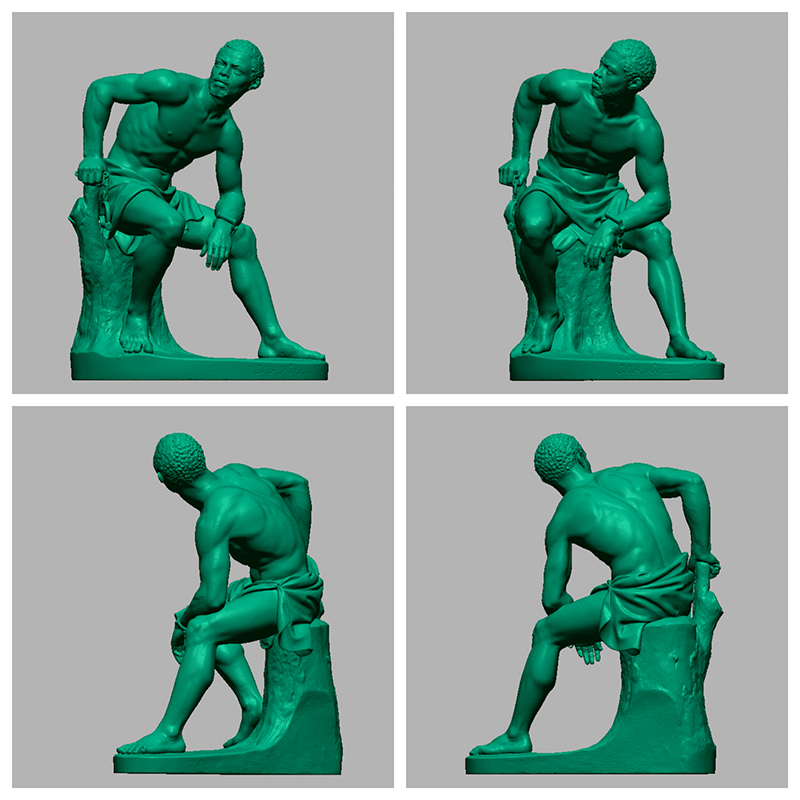
The 3D digital model of The Freedman enabled Hayden to view the sculpture from multiple perspectives and scales with just the click of a computer key, letting Hayden use a digital copy of the original work to create his reimagined sculpture.
- Research and Education
In addition to enhancing public engagement, 3D scanning plays a crucial role in advancing research and education within museums.
3D scanning captures objects in sharply defined detail, allowing the resulting CAD models to be examined from multiple angles and magnifications for detailed analysis, historical research, and interactive learning experiences.
Educational programs can use 3D printing to create models that help students and visitors better understand exhibits, while museum researchers can use replicas to make measurements, conduct virtual experiments, and perform detailed analyses without endangering the originals.
The body of new information already unlocked by 3D scanning of artworks is impressive, uncovering hidden details, identifying unknown features or signatures, detecting forgeries, and revealing underlying structures or changes in the creation process.
Choosing the Right Scanning Approach
When it comes to the scanning process, museums have the choice of performing the scans in-house or outsourcing the work to a professional service.
Factors such as facility size, data requirements, time constraints, and budget all influence that decision. While 3D scanning is often successfully performed in-house, professional services should be considered for projects requiring specialized equipment, large-volume scanning, high levels of quality and consistency, or strict timelines.
However, not all scanning service providers are created equal. Museums should carefully evaluate each provider's expertise, experience, and familiarity with scanning fragile and irreplaceable objects.
Conclusion
3D scanning is transforming museum curation by offering unprecedented opportunities for preserving, studying, restoring, and displaying priceless works of art and cultural artifacts.
As aging museum collections become more vulnerable to deterioration, environmental threats, and other potential dangers—and as expectations for public accessibility continue to grow—3D scanning offers museums new opportunities to preserve, study, and share their collections.
By creating digital models, museums not only safeguard their collections against the ravages of time and unforeseen disasters but also unlock new ways to engage the public. These digital duplicates allow for in-depth research, reveal hidden details, enable advanced analyses, and support restoration efforts without risking damage to the originals.
Detailed replicas can be created to safely exhibit and broaden accessibility to delicate artworks and cultural treasures, even providing tactile experiences for those who might not otherwise be able to engage with them.
By selecting 3D scanning technologies and workflows tailored to specific objects and preservation goals, museums can better address one of their greatest challenges: preserving the past while making it more accessible, understandable, and engaging for future generations.
Sources
1. Tyler, Michael J., Lydia Fucsko, and Dale Roberts. Calamities Causing Loss of Museum Collections: A Historical and Global Perspective on Museum Disasters (2023). Available from: https://www.researchgate.net/publication/367340065_Calamities_causing_loss_of_museum_collections_a_historical_and_global_perspective_on_museum_disasters_2023_Michael_J_Tyler_Lydia_Fucsko_and_Dale_Roberts
2. UNESCO. Protecting Museums and Collections During Emergencies. Available from: https://www.unesco.org/en/emergencies/culture/learning/collections