Learn How 3D Scanning Addresses Emerging Challenges in Industry and Technology
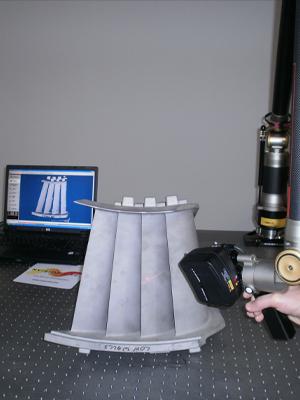
Part 1: Aerospace's Growing Sustainment Challenge: Keeping Legacy Aircraft Flying Safely and Economically
Some technologies, like great works of art, reveal their true merits over time. Consider the wheel. Originally developed as a tool to help potters rotate clay for making ceramics, its applications eventually expanded to include the wheel-and-axle system, interlocking gears, hydropower via the waterwheel, and much more.
The laser followed a similar path. Developed initially as a means of producing and studying highly controlled electromagnetic radiation, it was once considered to have limited practical use and was dismissed in some quarters as a "solution looking for a problem." In time, however, the laser revealed—and continues to reveal—an extraordinary range of applications, from communications and medicine to manufacturing and surveying.
One of the laser's most important industrial applications is the measurement of parts and assemblies that are difficult or impossible to measure accurately by conventional methods. Laser scanning helped pave the way for other sophisticated forms of optical measurement and remains one of the most effective ways to capture the complex surfaces and geometries of physical objects.
But there is another lesson in the evolution of technologies: as their capabilities expand and their service lives increase, new challenges often emerge that were not previously significant—or did not exist at all. An aircraft that was relatively easy to maintain when it was new can present an entirely different set of challenges decades later. Components wear out. Parts become obsolete. Original suppliers disappear. Engineering documentation can be lost or become outdated.
In other words, yesterday's technology can create tomorrow's engineering challenges, and sometimes a new application for an existing technology—in this case, the laser's ability to capture an object's physical dimensions and characteristics—is what helps solve them.
This series will explore emerging challenges in industry and technology and how they can benefit from 3D scanning and reverse engineering. In each installment, we'll look at how 3D scanning can provide the dimensional data, physical insight and engineering information needed to address these challenges and turn them into practical solutions.
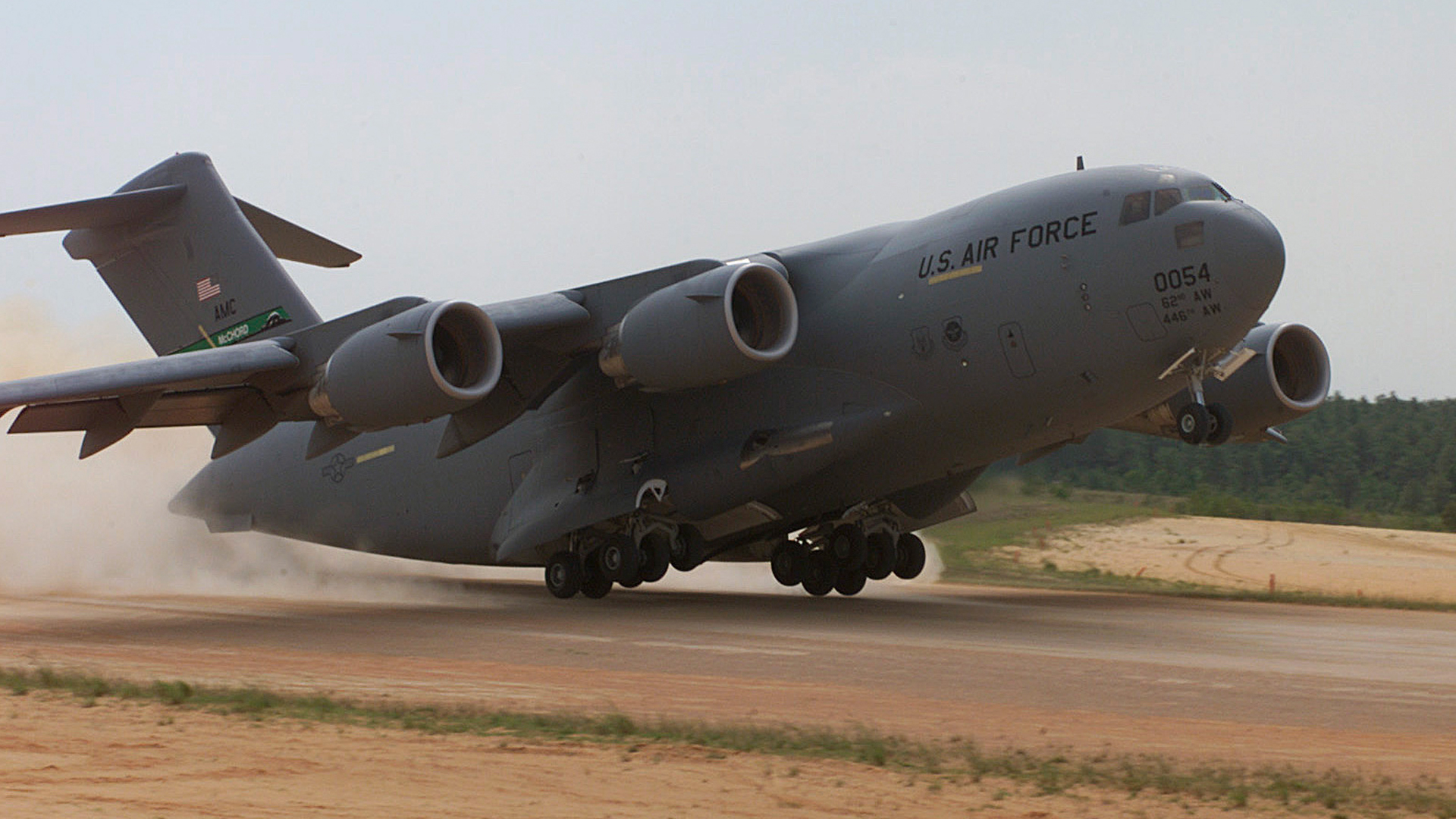
The Challenge: Aging Aircraft Fleets and Sustainment of Legacy Platforms
Why It's Emerging
The aerospace industry faces a growing sustainment challenge: keeping legacy aircraft flying safely and economically. Many military and commercial aircraft are remaining in service for decades longer than originally anticipated, creating increasing challenges for the maintenance, repair and replacement of aging components.
A major problem is that the original computer-aided design (CAD) files, engineering drawings, tooling and even supplier networks for these aircraft and their components may no longer exist. In some cases, the physical component itself may be the only reliable source of dimensional information.
How NVision Helps
- High-accuracy 3D scanning of obsolete components
- Reverse engineering of unavailable or obsolete parts
- Creation of CAD models from existing physical components
- Metallurgical testing to identify or verify material specifications
- Inspection of worn, damaged or modified components
For aging aircraft, 3D scanning can transform an existing component into a source of usable engineering data, even when the original design documentation is no longer available. By capturing a component's actual geometry with micron-level precision, NVision can help aerospace engineers create accurate CAD models for replacement-part development, assess wear and damage, and support inspection and maintenance decisions without relying solely on incomplete or outdated documentation.
With accurate digital models of as-built components and equipment, 3D scanning and reverse engineering can help aerospace organizations extend the useful life of legacy parts and platforms while addressing the increasingly complex challenges of sustaining them.
Have an emerging engineering or manufacturing challenge that could benefit from 3D scanning? NVision can help explore the possibilities. Contact us to learn more.
NVision, Inc.
577 Commerce Street, Suite 100
Southlake TX 76092
Tel: (817) 416-8006
sales@nvision3d.com
https://www.nvision3d.com/contact-us